🎉 Up to 70% Off Selected ItemsShop Sale
1 / 4
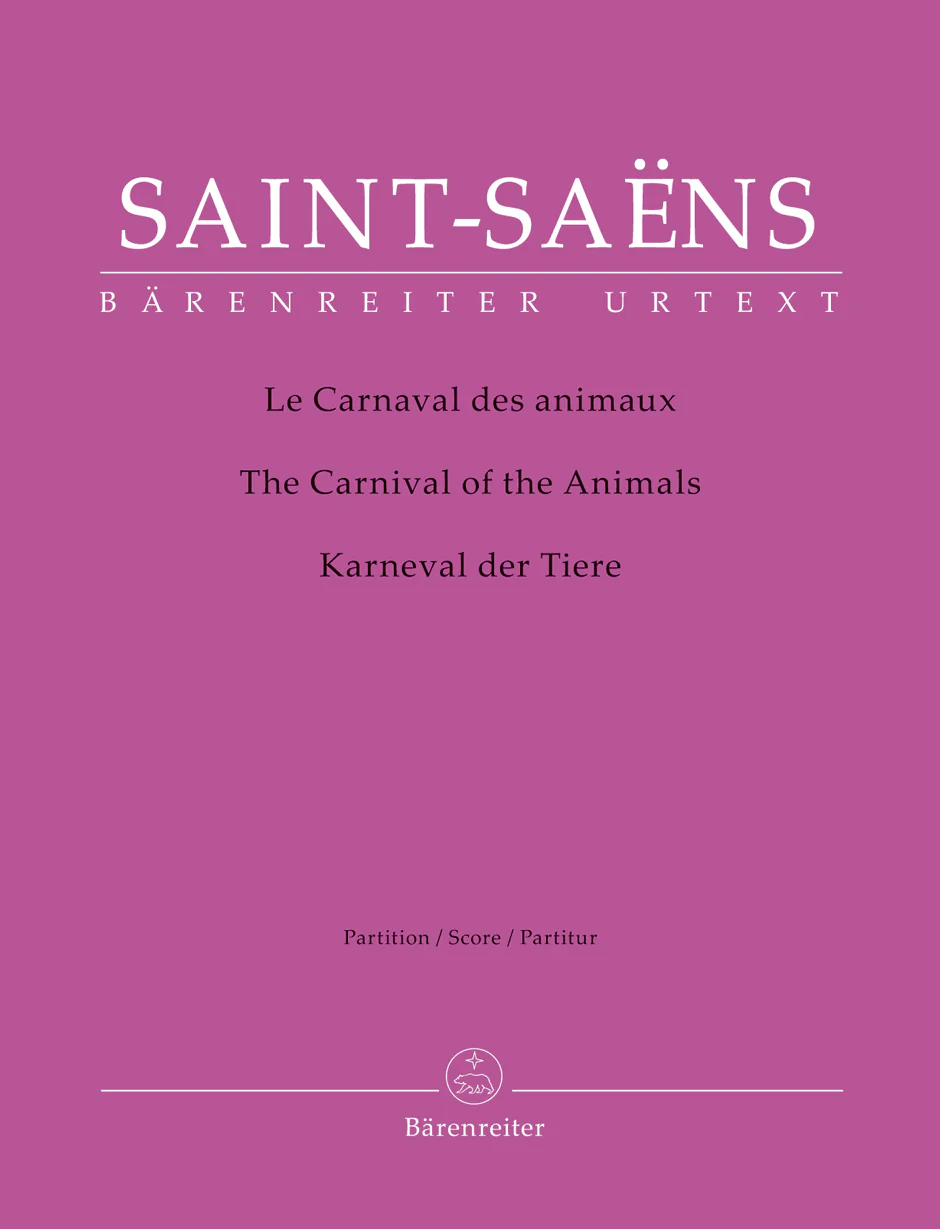
Saint-Saens The Carnival of the Animals, Score
In February 1886, Camille Saint-Saëns was supposed to urgently complete his “Organ Symphony”, but instead he worked on a composition that he had been dwelling on for a long time. This was “The Carnival of the Animals” with which he wanted to surprise the cellist Charles Joseph Lebouc for a carnival concert. Soon very popular within the composer’s circle, Saint-Saëns requested that the work was not to be published before his death. The only exception was the penultimate of the 14 movements, “The Swan”, which was published before Saint-Saëns died and was arranged in many different ways.
The special appeal of “The Carnival” lies in the diversity of the movements, which take a “zoological” look at pianists as well as numerous animals. Excerpts from works by composers such as Mendelssohn, Berlioz and Offenbach express both admiration and parody. Ultimately, it is this complexity that makes the composition particularly ingenious and entertaining.
The performing edition contains a detailed Introduction (Ger/Eng/Fr) and a Critical Commentary (Eng).
$21.68
Original: $61.95
-65%Saint-Saens The Carnival of the Animals, Score—
$61.95
$21.68Product Information
Product Information
Shipping & Returns
Shipping & Returns
Description
In February 1886, Camille Saint-Saëns was supposed to urgently complete his “Organ Symphony”, but instead he worked on a composition that he had been dwelling on for a long time. This was “The Carnival of the Animals” with which he wanted to surprise the cellist Charles Joseph Lebouc for a carnival concert. Soon very popular within the composer’s circle, Saint-Saëns requested that the work was not to be published before his death. The only exception was the penultimate of the 14 movements, “The Swan”, which was published before Saint-Saëns died and was arranged in many different ways.
The special appeal of “The Carnival” lies in the diversity of the movements, which take a “zoological” look at pianists as well as numerous animals. Excerpts from works by composers such as Mendelssohn, Berlioz and Offenbach express both admiration and parody. Ultimately, it is this complexity that makes the composition particularly ingenious and entertaining.
The performing edition contains a detailed Introduction (Ger/Eng/Fr) and a Critical Commentary (Eng).